
Tuesday, January 15, 2008
The Website for Biblia Clerus Resource...
I had a reader point out, on my other blog, that the url to the Biblia Clerus leads to a page that is unavailable (find the blog here). I checked the link. The link is the right one, but the page does seem to be down at the moment. Please keep trying. Hopefully, they will have it up soon.

Monday, January 07, 2008
The Four Senses - the Literal Sense

In a previous blog (found here), I gave a brief overview of the four senses of Scripture. My intent is to encourage people to read and study the Scriptures by utilizing the four senses so that they may hear God speaking to them and, of course, to deepen our knowledge of Revelation.
Today, I want to examine the literal sense in more detail. The Catechism defines the literal sense thusly:
116 The literal sense is the meaning conveyed by the words of Scripture and discovered by exegesis, following the rules of sound interpretation: "All other senses of Sacred Scripture are based on the literal."
St. Thomas defines the literal sense as
[the] first signification whereby words signifies things belongs to the first sense, the historical or literal. (STh I q1. a10 )
Let me explain. St. Thomas makes the division between the literal and spiritual senses by what exactly is signifying something else. The literal sense is that where the words signify things. This is common usage. When we speak or write, we use words to signify some thing. The spiritual sense, however, is that where things signify other things. St. Thomas states that God, since he is the author of Holy Scripture, can signify what he means not only with words (as we do) but also with the things themselves; indicating the literal and spiritual senses, respectively.
The Catechism makes this clear when it says that the "literal sense is the meaning conveyed by the words of Scripture". This is where exegesis and commentaries come in. It is clear that the sacred writers didn't write in English or with a 21st mind-set. In addition, this is God's word expressed in human words by authentic human authors. Therefore, we must discover the true intention of the sacred author in order to discover the intention of the Holy Spirit.
To search out the intention of the sacred writers, attention should be given, among other things, to "literary forms." For truth is set forth and expressed differently in texts which are variously historical, prophetic, poetic, or of other forms of discourse. The interpreter must investigate what meaning the sacred writer intended to express and actually expressed in particular circumstances by using contemporary literary forms in accordance with the situation of his own time and culture. For the correct understanding of what the sacred author wanted to assert, due attention must be paid to the customary and characteristic styles of feeling, speaking and narrating which prevailed at the time of the sacred writer, and to the patterns men normally employed at that period in their everyday dealings with one another. (Dei Verbum #12)
The best explanation I've heard is that of a "knock, knock joke". If you were sitting with a friend and they turned to you and said, "Knock, knock". You would naturally reply, "Who's there?" If on the other hand your friend says "Knock" waits for two minutes and says "Knock" again, you wouldn't know what they are trying to do. The reason is that you know the convention of starting a 'knock, knock-joke'. When someone uses those particular words in a particular manner you already know the "form" of the joke and can respond accordingly with the expectation that you will be hearing a joke once you have said "Who's there?" We must learn through historical research what these conventions were that the sacred writers used so we can understand what they are trying to communicate whether that be history, a parable, a proverb, etc. Pope Benedict XVI in the Foreword to his book Jesus of Nazareth states that the Historical-Critical method is "an indispensable dimensions of exegetical work. For it is the very essence of biblical faith to be about real historical events." However, this does not mean that only those with degrees in Scripture scholarship should read the Bible, or that biblical exegesis is exhausted by the Historical-Critical Method (as is plainly stated by Pope Benedict XVI in the same Foreword to Jesus of Nazareth). We must, however, rely on experts to help us. There is a lot of good work out there and a bunch of bad. One criteria I use is to "ask" the commentary I am using its opinion of miracles. If the author(s) rejects miracles or tries to explain them away, then I know to take it with a grain of salt. Another even better criteria is to ascertain the position of the author(s) towards the Magisterium. If the Church's authority is rejected, then the commentary must be used very carefully. Protestant or Jewish commentaries can be valuable if one realizes their limitations.
Now, we must become students of the Scripture not simply relying on others to tell us what the sacred text means. We must study so as to come to the meaning of the Scriptures ourselves. Now I am not suggesting that we do 
Only by entering into Jesus' solitude, only by participating in what is most personal in him, his communication with the Father, can one see what this most personal reality is; only thus can one penetrate to his identity. This is the only way to understand him and to grasp what "following Jesus" means. The Christian confession is not a neutral proposition; it is prayer, only yielding its meaning within prayer. (pg. 19)
Jesus prayed in the words of Scripture an that Scripture became flesh in him, became the actual Passion of this Righteous One; and that he thus inserted his death into the word of God, in which he lived and which lived in him declaring itself in him. (p. 24)
Since the center of the person of Jesus is prayer, it is essential to participate in his prayer if we are to know and understand him. (p. 25)
To know him we must be in a certain way like him. To know the Scriptures requires knowing him since Christ the Word is the principle, subject, and author of Scripture.
OK, back to the literal sense. St. Thomas identifies four divisions of the literal sense: historical, etiological, the analogy of faith, and metaphorical (or parabolic). (STh I q1.a10.ad2) It is called historical when anything is simply related. This would be the case in much of the Gospels as they are simply relating what happened. That does not mean, however, that the Gospels are a simple reporting of a historical timeline. The Catechism tells us that the Gospel writers
126§3 ...in writing the four Gospels, selected certain of the many elements which had been handed on, either orally or already in written form; others they synthesized or explained with an eye to the situation of the churches, the while sustaining the form of preaching, but always in such a fashion that they have told us the honest truth about Jesus.
The key here being that "they have told us the honest truth about Jesus". It is etiological when the cause is assigned, "as when Our Lord gave the reason why Moses allowed the putting away of wives - namely, because of the hardness of men's hearts (cf. Mt 19:8)" (STh I q1.a10.ad2). It is the analogy of faith when the truth of one text is shown not to contradict the truth of another (cf. CCC #114). Finally, the metaphorical (or parabolical sense)
is contained in the literal, for by the words things are signified properly and figuratively. Nor is the figure itself, but that which is figured, the literal sense. When Scripture speaks of God's arm, the literal sense is not that God has such a member, but only what is signified by this power, namely, operative power. Hence is is plain that nothing false can ever underlie the literal sense of Holy Scripture. (St. Thomas STh I q1.a10.ad3)
Analyzing and determining the literal sense of a Scripture is arduous work. It takes time to wrestle with the text, read the commentaries, look at word meanings, and pray. It is the work of love, and it does bear abundant fruit. I would suggest beginning in the New Testament in one of the Gospels. Oh, one last resource. I have found the Synopsis of the Four Gospels edited by Kurt Aland a tremendous help. He lines up the four Gospels according to subject side by side so one can compare the Gospels easily to one another.
A commenter pointed out that Mark Shea wrote a book concerning the four senses (follow the link. You'll have to scroll down a bit to find it). It is called Making Senses Out of Scripture: Reading the Bible as the First Christians Did. I have not read it, but I am sure it is excellent.
Next time, we'll take a look at the Spiritual senses of Scripture.
Thursday, January 03, 2008
EPIPHANY!!

We just received a visit from the wise men! In Gaming, (and maybe the rest of Austria) there is a tradition where the wise man come to each house and write their initials and the year above the door. We were fortunate enough to be home today when they visited.
Wednesday, January 02, 2008
The Four Senses of Scripture
 There have been several different situations that have converged to make me think a blog on this may be helpful. The Catechism of the Catholic Church #133 states:
The Church "forcefully and specifically exhorts all the Christian faithful. . . to learn the surpassing knowledge of Jesus Christ, by frequent reading of the divine Scriptures. Ignorance of the Scriptures is ignorance of Christ.
We all want the Lord to speak to us, to encourage us, to tell us that he loves us. He does. He speaks to us through the Scriptures:
Let them remember that prayer should accompany the reading of Sacred Scripture, so that God and man may talk together; for "we speak to Him when we pray; we hear Him when we read the divine saying." (The Dogmatic Constitution on Divine Revelation Dei Verbum #25 - quoting St. Ambrose.)
The same theme is repeated earlier in Dei Verbum:
For in the sacred books, the Father who is in heaven meets His children with great love and speaks with them; and the force and power in the word of God is so great that it stands as the support and energy of the Church, the strength of faith for her sons, the food of the soul, the pure and everlasting source of spiritual life. (#21, emphasis mine)
Thus, the place that we must turn when seeking the Lord's voice is the Sacred Scriptures approaching them in an attitude of prayer, docility, and careful listening. We must keep in mind what the Scriptures tells us about listening to the Lord's voice:
And he [God] said, Go forth, and stand upon the mount before Jehovah. And, behold, Jehovah passed by, and a great and strong wind rent the mountains, and brake in pieces the rocks before Jehovah; but Jehovah was not in the wind: and after the wind an earthquake; but Jehovah was not in the earthquake: and after the earthquake a fire; but Jehovah was not in the fire: and after the fire a still small voice. And it was so, when Elijah heard it, that he wrapped his face in his mantle, and went out, and stood in the entrance of the cave... 1 Kings 19:11-13a
This "still small voice" can only be heard through perseverance, silence, and listening. We don't hear God with our ears; we hear him with our heart. Listening to God requires faith and a sensitivity to the Spirit that must be cultivated through prayer. It also demands docility to what God wants to say not necessarily what we want to hear. I know in my own life that there were many times I claimed that the Lord wasn't speaking to me. The fact was he was telling me what I needed to hear rather than what I wanted to hear. I just didn't want to hear. There have been, however, a multitude of times where he has deeply consoled me with the exact words I needed to hear through the Scriptures, other spiritual books, homilies, or loved ones. The Lord has even spoken directly to my heart but never to my ears. We learn to discern to hear the lord's voice in other places through hearing his voice in the Scriptures.
It is clear, then, that we must steep ourselves in the Holy Writ, but how to start? There are many resources available to study the Scriptures. However, it can be difficult to find a good Catholic commentaries (the Ignatius Study Bibles and the Navarre Bible are excellent, although no commentary is complete). In these next blogs, I would like to discuss the Four Senses of Scripture as one means of penetrating the Biblical text. The Sacred Scriptures are not just for a few elite linguists to understand. The Lord intended it for all. St. Thomas indicates it thusly:
It is thus that the sacred text not only adapts itself to man's various intelligence, so that each one marvels to finds his thoughts expressed in the words of Holy Writ...(St. Thomas Aquinas On the Power of God question 4 article 1)
It is also befitting Holy Scripture which is proposed to all without distinction of persons - to the wise and to the unwise I am a debtor (Rom 1:14) - that spiritual truths be expounded by means of figures taken from corporeal things, in order that thereby even the simple who are unable by themselves to grasp intellectual things may be able to understand it. (St. Thomas Aquinas Summa Theologiae I question 1 article 9.
All of us can understand the Scriptures. We first need to pray for the assistance and inspiration of the Holy Spirit and then roll up our sleeves and dig in! The four senses help us in this regard.
The four senses can be divided into the literal and spiritual sense. The literal sense can be defined as 'what the words themselves signify', whereas the spiritual sense is the 'things themselves signifying other things'. (cf. St. Thomas Summa I q1. a10) The spiritual sense can then be divided into three: allegorical (or typical), moral (or tropological), and anagogical. For a simple definition of each nothing is better than the Catechism.
The senses of Scripture
115 According to an ancient tradition, one can distinguish between two senses of Scripture: the literal and the spiritual, the latter being subdivided into the allegorical, moral and anagogical senses. The profound concordance of the four senses guarantees all its richness to the living reading of Scripture in the Church.
116 The literal sense is the meaning conveyed by the words of Scripture and discovered by exegesis, following the rules of sound interpretation: "All other senses of Sacred Scripture are based on the literal."
117 The spiritual sense. Thanks to the unity of God's plan, not only the text of Scripture but also the realities and events about which it speaks can be signs.
1. The allegorical sense. We can acquire a more profound understanding of events by recognizing their significance in Christ; thus the crossing of the Red Sea is a sign or type of Christ's victory and also of Christian Baptism.
2. The moral sense. The events reported in Scripture ought to lead us to act justly. As St. Paul says, they were written "for our instruction".
3. The anagogical sense (Greek: anagoge, "leading"). We can view realities and events in terms of their eternal significance, leading us toward our true homeland: thus the Church on earth is a sign of the heavenly Jerusalem.
118 A medieval couplet summarizes the significance of the four senses:
119 "It is the task of exegetes to work, according to these rules, towards a better understanding and explanation of the meaning of Sacred Scripture in order that their research may help the Church to form a firmer judgement. For, of course, all that has been said about the manner of interpreting Scripture is ultimately subject to the judgement of the Church which exercises the divinely conferred commission and ministry of watching over and interpreting the Word of God."
- The Letter speaks of deeds; Allegory to faith;
The Moral how to act; Anagogy our destiny.
- But I would not believe in the Gospel, had not the authority of the Catholic Church already moved me.
Next time, we'll define the literal sense in more detail, examine the four different literal senses, and see examples for them. One of the important things here is not to be afraid or intimidated. Seek the assistance of the Holy Spirit and dive in!
HAPPY BIRTHDAY FELICITY!!
I can't believe that my little girl is as tall as her mom and now 14 as of 12/30!! Time surely flies by. She is a tremendous blessing in our lives. She is an excellent student and such a help with the baby. She is a fantastic cook, also! These are precious times...
 The Lee "Bookends" (for the time being anyway ;-))
 The Demonstration of the 14 year-old "Eye Roll". She has it perfected as you can see... :-)
 Daddy's Little Princess...
We love you Felicity!! We are so proud of the young woman you have become!
 The Lee "Bookends" (for the time being anyway ;-))
 The Demonstration of the 14 year-old "Eye Roll". She has it perfected as you can see... :-)
 Daddy's Little Princess...
We love you Felicity!! We are so proud of the young woman you have become!
The Kartause Kids' Production of Dickens' A Christmas Carol...
We had the pleasure of attending a production of Dickens' A Christmas Carol on New Year's Eve performed by the children of the Kartause community. Felicity, Cody, and Zach all participated. It was amazing how well everyone of the kids performed. It was superb!! Felicity was Bob Cratchit's wife; Cody was Fezziwig and the man seeking charity for the poor; and Zach was Tiny Tim. Please enjoy the photos and the video of Cody's dancing debut!!

 Tiny Tim and Ebenezer (James Thompson)
 The Lovely Mrs. Cratchit.

The Cast of Lees
 Tiny Tim and Ebenezer (James Thompson)
 The Lovely Mrs. Cratchit.
Friday, December 28, 2007
Pilgrimage to Lisieux...

I finally had the time to get the pictures from our pilgrimage to Lisieux uploaded with captions. Please check it out here: http://picasaweb.google.com/ShoelessMichael/PilgrimageToLisieux. It was an amazing trip. As I was posting the pictures, I was trying to think of what impacted me the most about the trip. It is not easy to put these kinds of experiences into words - even for me!! ;-)
Two things immediately come to my mind:
1) It is the reality of the Saint. We hear so many lofty stories about these people that they take on an almost mythical character. Her reality impressed me more than I thought it would. To see where she said confession, to see where she sat as her family attended Mass really brought home that she was just like us, which made her that much more accessible for me.
2) Her closeness and presence while we were there. St. Therese's presence was palpable. You sensed her eagerness to assist you in getting closer to God. You sensed deep, abiding love. So many prayers were answered as she obtained the graces we so desperately needed.
Please know that we carried everyone of you with us in our hearts. We prayed for you and asked that St. Therese would seek God on your behalf.
I will never forget this trip. It was a time to come, once again, in to close contact with my Carmelite brothers and sisters. It was a time of grace...
Thursday, December 20, 2007
FINALS ARE OVER!! FINALS ARE OVER!!!!
There is NO better feeling in the world than walking out of that last final knowing that you are free for a few weeks. WHEW! I am glad it is over. Now it is time to try and catch up here. :-) I will be posting some of the pictures of our Lisieux Pilgrimage over the next few days and some fun stuff of the family. Here is some nice pictures of the snowy Kartuase and the kids for a start.
THANK YOU SO VERY MUCH FOR YOUR LOVE, PRAYER, AND SUPPORT! I COULDN'T DO IT WITHOUT YOU!

 Ezekiel Thomas
 14 on December 30th.
 Killing a kid in the same town St. Joan of Arc was burned at the stake. :-)
 In front of the Cathedral that St. Therese attended as a child (as a teaser ;-))
 Standing on these steps, the kids were looking upon the tombs of St. Therese's parents (who have been beatified).
 The Basilica of St. Therese of the Child Jesus and the Holy Face, Lisieux, France.
THANK YOU SO VERY MUCH FOR YOUR LOVE, PRAYER, AND SUPPORT! I COULDN'T DO IT WITHOUT YOU!

The Kartause in Winter. THe crane is there as they are remodeling the restaurant.
 Ezekiel Thomas
 14 on December 30th.
 Killing a kid in the same town St. Joan of Arc was burned at the stake. :-)
 In front of the Cathedral that St. Therese attended as a child (as a teaser ;-))
 Standing on these steps, the kids were looking upon the tombs of St. Therese's parents (who have been beatified).
 The Basilica of St. Therese of the Child Jesus and the Holy Face, Lisieux, France.
Friday, December 14, 2007
HAPPY FEAST DAY!!
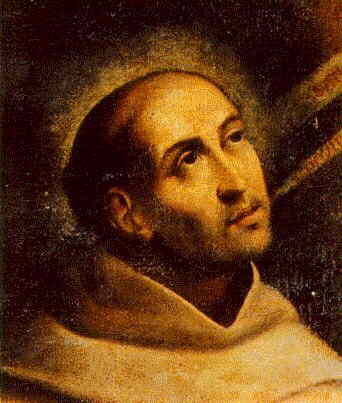 HAPPY FEAST DAY!! Today is the memorial of the "Mystical Doctor": St. John of the Cross. He was a Discalced Carmelite who assisted St. Teresa of Avila in her reforms of the Order. He is a great saint known most for his writing about the spiritual life, especially about the "dark night of the soul", which in my opinion is completely misunderstood by many.
You can find his major works
here. I think an excellent book that speaks of his teaching as a way of an introduction is Father Dubay's Fire Within, which also treats St. Teresa of Avila's teaching.
He is considered one of the greatest Spanish poets of all time. Here is his Living Flame of Love:
1. O living flame of love
that tenderly wounds my soul
in its deepest center! Since
now you are not oppressive,
now consummate! if it be your will:
tear through the veil of this sweet encounter!
2. O sweet cautery,
O delightful wound!
O gentle hand! O delicate touch
that tastes of eternal life
and pays every debt!
In killing you changed death to life.
3. O lamps of fire!
in whose splendors
the deep caverns of feeling,
once obscure and blind,
now give forth, so rarely, so exquisitely,
both warmth and light to their Beloved.
you wake in my heart,
where in secret you dwell alone;
and in your sweet breathing,
filled with good and glory,
how tenderly you swell my heart with love.
I found where they have this particular poem and commentary. The Rodriguez and Kavanaugh translation. Check it out!
Thursday, December 13, 2007
EXCELLENT RESOURCE!!
 I am surfacing from studying for finals to take a quick minute to tell you about this new amazing resource from the Congregation for the Clergy. It is absolutely amazing. You can download the entire site as a tool for Bible study. It has a bunch of features: multiple versions of the English translation, Greek, Hebrew, and Latin. They cross-reference individual verses to writings of the Church Fathers, St. Thomas Aquinas, the Catechism, and others. The downloaded materials include the entire Canon Law, Catechism of the Catholic Church, etc. If you can read Latin, there is the entire Summa, Commentary on the Sentences (St. Thomas), Denzinger, and others. It can be used by people of all levels. I am sure they will be adding other resources as time goes on. If you study Scripture, this is a must. The price can't be beat, either....free! Click on the image to go to the website.
I would please ask for your prayers as I finish out the semester. Lots of finals and difficult ones at that. Thank you so much for your prayers and support. It means so much to us. Once finals are over, we have a bunch of really neat things to share with you so keep your eye out!
Thursday, November 15, 2007
SNOW DAY!!!!!!!

Snow Day!!!!

Snow Day!!!!

Snow Day!!!!
SHOOT! I'm in home school.
But don't get me wrong I will play in this snow, no matter what! No matter what my parents say. No matter what my teacher says. No matter what! I will play in the snow. Nothing can stop me!!!!!!
What's this? A letter ! Wow, a free trip to the Bahamas! Life can be sooooo Cruel!!!

Sunday, November 11, 2007
The Feast of St. Martin of Tours

So tonight we celebrated the Feast of St. Martin of Tours. St. Martin was the saint Zach chose to dress up as on All Saints Day, since he was a young soldier (with a sword!!!!) He had nothing but weapons and clothing and one evening out in the cold rain saw a beggar who was almost naked, so he drew his sword and cut his coat in two and gave half of it to the beggar. A very honorable young man from Hungry, who gave to the least of his brother. That evening he received a vision of Christ dressed in the garment he had given to the poor beggar. "For I was hungry and you gave me food, I was thirsty and you gave me drink, a stranger and you welcomed me, naked and you clothed me, ill and you cared for me, in prison and you visited me." Matthew 25:35-36 St. Martin went on to become one of the most celebrated Bishops of the 4th century. He died in 397.
What a fitting evening is was to take our home-aide lanterns out into the cold, bitter, rainy night and process around the church courtyard to honor St. Martin with all the Kartause Children. We processed singing to St. Martin in German and then went
 before the church altar to offer our lives once again to our Lord in honor of St. Martin. Then we went into an upper room to celebrate with hot chocolate, cider, and cookies. What a wonderful feast day celebrating a young mans life in service of our Lord.

So as you can see we have left our lights of St. Martin burning on our front steps for you. We just want you all to know that our home is always your home. You are always welcome here. There will always be a warm meal and a friendly face to greet you. So come on over!!!

Sunday, November 04, 2007
I realized that the post below was likely very confusing. It is hard to describe the Proofs of God in a few short sentences, but I didn't want a five page blog either (as I am sure you didn't). There is an excellent treatment of these arguments at Dr. Peter Kreeft's website. He is a professor of Philosophy at Boston College and brilliant scholar/teacher. You can find them here. Go thou and check it out!
Saturday, November 03, 2007
One Less Atheist in the World...
 Found this interview with Antony Flew, via The Insight Scoop Blog. Mr. Flew was a life long atheist thinker who now has come to belief in God. Not the Christian God, mind you. He considers himself a Deist. In his view of God, God created the world and let it go to its own devices. Like a the classic watchmaker analogy. God made the world, wound it up, and then let it go.
Mr. Flew cites two decisive points for his "conversion". Interesting that both points fold into the classic argument for God from design:
There were two factors in particular that were decisive. One was my growing empathy with the insight of Einstein and other noted scientists that there had to be an Intelligence behind the integrated complexity of the physical Universe. The second was my own insight that the integrated complexity of life itself – which is far more complex than the physical Universe – can only be explained in terms of an Intelligent Source. I believe that the origin of life and reproduction simply cannot be explained from a biological standpoint despite numerous efforts to do so. With every passing year, the more that was discovered about the richness and inherent intelligence of life, the less it seemed likely that a chemical soup could magically generate the genetic code. The difference between life and non-life, it became apparent to me, was ontological and not chemical. (emphasis mine)
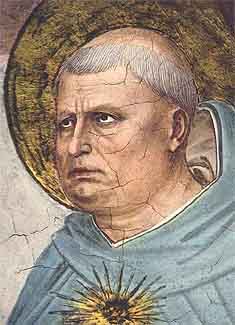
The fifth way is taken from the governance of the world. We see that things which lack intelligence, such as natural bodies, act for an end, and this is evident from their acting always, or nearly always, in the same way, so as to obtain the best result. Hence it is plain that not fortuitously, but designedly, do they achieve their end. Now whatever lacks intelligence cannot move towards an end, unless it be directed by some being endowed with knowledge and intelligence; as the arrow is shot to its mark by the archer. Therefore some intelligent being exists by whom all natural things are directed to their end; and this being we call God. (STh I.2.3)
The last line of the quote from Mr. Flew I found interesting. He is saying, I believe, that he recognized that the difference between living things and non-living things wasn't simply a different chemical composition or arrangement of atoms, but the difference lies in that the living thing has something about its being that causes it to be alive. In other words, a soul. In Aristotelian terms, Mr. Flew recognized that a being (especially one that is alive - it is easiest to see there) has a unity about the thing and something else that makes it a certain thing as different from just a pile of parts. This principle of unity of a thing that individuates it is called the form of the thing. Thus, humans aren't merely an arrangement of molecules but a being standing in itself in distinction of other things. Our soul is our form. It is the principle that individuates matter into an individual thing of a certain sort. To accept that beings are composites of matter and form is a giant leap to accepting God because then there are logical consequences that make God necessary. Aristotle covered these arguments in the Physics and Metaphysics.
The interview continues with the interviewer asking him about the scientific data that supports the existence of God (which Mr. Flew claims convinced him). He then comments to the question of atheists being behind the curve on scientific evidence supporting God's existence:
Yes indeed. I would add that Dawkins is selective to the point of dishonesty when he cites the views of scientists on the philosophical implications of the scientific data.
Two noted philosophers, one an agnostic (Anthony Kenny) and the other an atheist (Nagel), recently pointed out that Dawkins has failed to address three major issues that ground the rational case for God. As it happens, these are the very same issues that had driven me to accept the existence of a God: the laws of nature, life with its teleological organization and the existence of the Universe. (emphasis mine)
Once again, Mr. Flew cites issues, that drove him to accept the existence of God, that are the basis for the arguments asserting God's existence from the time of Aristotle on. St. Thomas takes them up in the question from the Summa that is linked to above. The "laws of nature" and "life with its teleological (ordered to the end) organization" are answered in the argument from the Summa cited above (the so-called 5th way). The "existence of the Universe" is answered in the 2nd way where St. Thomas proves the existence of the First Efficient Cause. The First Efficient Cause argument basically states that there must be a cause of all existence that is in itself uncaused. It is because a thing cannot cause itself. Thus, it must be caused by another. This cannot go onto infinity in ordered causes, however, or there would never be the effect because there would not be a first cause. God is this First Efficient Cause of all being Who is not caused.
He wraps up by stating :
I accept the God of Aristotle who shares all the attributes you cite. Like Lewis I believe that God is a person but not the sort of person with whom you can have a talk. It is the ultimate being, the Creator of the Universe.
As Jesus said to the lawyer, "You are not far from the kingdom of God." (Mk 12:34); he would say the same to Mr. Flew. The God of Aristotle is the God of St. Thomas. Once Mr. Flew discovers how St. Thomas corrects and expands (via Divine Revelation) Aristotle's understanding he will be ready. Furthermore, if he carefully reflects on what it means to be person, he will realize that a essential aspect of a person to transcend himself to another. That in the very what it means to be person is to be self communicating, the highest form of that communication being love. When he realizes this, Mr. Flew will know that God as Person will be essentially self communicating, and since God's essence is his existence, God's very being will be to self communicate. We see this in the complete self communication between the three Persons of the Blessed Trinity. Thus, we can have that talk with God, Mr. Flew. He came in human form so he might speak to us face-to-face in the Person of Jesus Christ.
Friday, November 02, 2007
All Souls Day...
As most know, today we pray for all the souls that have departed this world for the next, especially those that are not Canonized Saints because we don't know their eternal disposition.
The Liturgy of the Hours celebrates the Office of the Dead today. As I prayed for those souls that have gone before, I began to think of my own death. Death is an evil. We were never meant to die. Death is a consequence of Original Sin. We are eternal creatures and deep down we know it. That is why death seems like such an evil. We are supposed to live eternally, and we face this experience that seems as though it will annihilate us. We sense that at the point of death we cease to exist - to be.
Some of the early Greek philosophers suggested that the human (rational) soul was eternal in a certain respect. Aristotle in De Anima thought that it was only the intellect that was eternal. Since the intellect only knows something through the passive intellect that is not eternal, our eternal soul then must not know anything.
We know through Christian Revelation that we are eternal beings. We die because of the Fall. However, the Father in his infinite love sent his Son to destroy death (the eternal death of being separated from God) by dying and rising again for the forgiveness of our sins. Now we know definitively through faith that we can live forever in the Beatific Vision. This eternal live is lived seeing God for who he is and being completely united to him in charity.
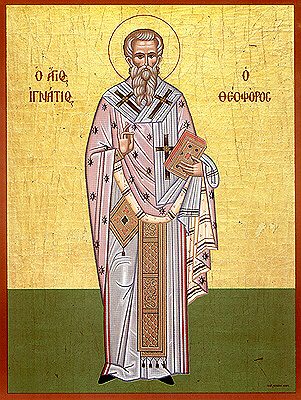
As I said, death is frightening and disturbing. I found great consolation in the writings of St. Ignatius of Antioch and wanted to share. He was the third Bishop of Antioch and lived on the late first and early second century (~50~110). He survived the Domitian persecutions but was called to martyrdom under Trajan. Trajan condemned him in Antioch. During the very long and arduous journey to Rome to die (he called the soldiers guarding him "ten leopards, even a company of soldiers, who only grow worse when they are kindly treated." (Letter to Romans)), he wrote to seven different Churches to exhort and teach them. The Letters were to the Magnesisans, Trallians, Ephesians, Philadelphians, Smyrnaeans, Romans, and to the Bishop of Smyrna St. Polycarp (who was martyred later). I would recommend reading every one of them. They are short and contain a lot of great teaching. St. Ignatius was the first to use the term "catholic " in reference to the Church and the name 'Christian' in a positive manner.
Anyway, in his letter to the Romans he is asking them not to save him from martyrdom. He wanted to be with his Lord:
I am writing all the churches to let it be known that I will gladly die for God if only you do not stand in my way. I plead with you: show me no untimely kindness. Let me be food for the wild beasts, for they are my way to God. I am God's wheat and shall be ground by their teeth so that I may become Christ's pure bread. Pray to Christ for me that the animals will be the means of making me a sacrificial victim for God.
No earthly pleasures, no kingdoms of this world can benefit me in any way. I prefer death in Christ Jesus to power over the farthest limits of the earth. He who died in the place of us is the one object of my quest. He who rose for our sakes is my one desire. The time for my birth is close at hand. Forgive me, my brothers. Do not stand in the way of my birth to real life; do not wish me stillborn. My desire is to belong to God. Do not, then, hand me back to the world. Do not try to tempt me with material things. Let me attain pure light. Only on my arrival there can I be fully a human being. Give me the privilege of imitating the passion of my God. If you have him in your heart, you will understand what I wish. You will sympathize with me because you will know what urges me on.
The prince of this world is determined to lay hold of me and to undermine my will which is intent on God. Let none of you here help him; instead show yourselves on my side, which is also God's side. Do not talk about Jesus Christ as long as you love this world. Do not harbor envious thoughts. And supposing I should see you, if then I should beg you to intervene on my behalf, do not believe what I say. Believe instead what I am now writing to you. For though I am alive as I write to you, still my real desire is to die. My love of this life has been crucified, and there is no yearning in me for any earthly thing. Rather within me is the living water which says deep inside me: "Come to the Father." I no longer take pleasure in perishable food or in the delights of this world. I want only God's bread, which is the flesh of Jesus Christ, formed of the seed of David, and for drink I crave his blood, which is love that cannot perish.
I am no longer willing to live a merely human life, and you can bring about my wish if you will. Please, then, do me this favor, so that you in turn may meet with equal kindness. Put briefly, this is my request: believe what I am saying to you. Jesus Christ will make it clear to you that I am saying the truth. Only truth can come from the mouth by which the Father has truly spoken. Pray for me that I may obtain my desire. I have not written to you as a mere man would, but as one who knows the mind of God. If I am condemned to suffer, I will take it that you wish me well. If my case is postponed, I can only think you wish me harm. (Taken from the Liturgy of the Hours: St. Ignatius' Memorial; October 17th)
They wished him well. As soon as St. Ignatius arrived in Rome, he was fed to the lions in the Flavian Amphitheater...
What an amazing perspective! I so often cling to this life like it is the only one that is possible. I completely forget the admonition of Jesus: "For whoever would save his life will lose it; and whoever loses his life for my sake and the gospel's will save it." (Mark 8:35) This life is but a shadow of the one that God has in store for us. Our true life, the one that was always intended for us, is found in the Beatific Vision. Let us allow, then, St. Ignatius' words and attitude to penetrate us deeply so that we live this life, not in fear of its end, but in hope for the true beginning of our life; to see God, to be united to him, that is our life. Let us on this day, where we pray for the dead, let go of the fear of death. Then we can begin to live our eternal life now and say with St. Paul: "'O death, where is thy victory? O death, where is thy sting?' The sting of death is sin, and the power of sin is the law. But thanks be to God, who gives us the victory through our Lord Jesus Christ." (I Corinthians 15:55-57)
Thursday, October 25, 2007
Ahem...Is this thing still on??
I have finally surfaced, gasping for air, at the ITI's fall 10-day break. I made it here only by the grace of God. Of course, the break isn't really a break. It is just a break from classes so you can write all the papers assigned. I just finished a paper on St. Thomas' proof that God's essence is his being. It is in the Prima pars of the Summa Theologiae, Question 3, Article 4. For those of you unfamiliar with the citation of St. Thomas' works. The first letters designate the work, in this case STh (for Summa Theologiae). Next, the part of the Summa is designated. There is the First Part (prima pars), the Second Part of the First Part (pars secunda prima pars) Second Part (secunda pars), the Second Part of the Second part (pars secunda secunda pars) and the Third Part (tertia pars). These are designated by Roman numerals e.g., STh I-II is the Second Part of the First Part of the Summa. Then, the questions are numbered, and then the articles. So, to cite the text above, one would write STh I.3.4. This proof relates to the proofs of God in STh I.2.3. It is only in STh I.3.3 and and STh I.3.4, cited above, that the proofs of God are complete.
Finished a Latin exam working through passive case and the genitive case (possessive). I think I have more trouble remembering English grammar than I do Latin grammar! I think the last time I studied grammar was like 30 years ago! Scary....
Over the break I will be finishing up a summer course, writing a paper on the Christology of St. Ignatius of Antioch, and starting to think about papers on the habit of faith as understood through faith's act and object and exploring the centrality and implications of the understanding of Church as a communion.
I also plan to have several International Wrestling Championships with my boys, take a long walk with my wife, and take my daughter to coffee. I am looking forward to the next week!
Thank you all for your prayer support and financial support. There is no way we could do this without you. We are blessed by your friendship and love...
Tuesday, October 16, 2007
Just to Make You Smile

They can make you madder than anyone on the earth. Those darn kids. For instance last night Eli and Zach-Attack decided to make a water slide out of the bathroom and then to cover their tracks they dried up the pond they made in the bathroom with every bath towel we own. Ever seen an entire family drip dry. It ain't a pretty sight. Yet they bring more love, more joy, move laughter, and more smiles than we would ever have the chance to experience without them. Aren't kids just great!!!
I hope these bring a smile to your face today. Have a great day!!!!!


Austria has mutated me - Aghhh!
 Over this past year something terrible has happened. I caught Austrian Fever. The first symptoms started with my face turning a odd shade of Green, and I got a hankering for pizza. Kawabunga Dude! My mom says my room is beginning to smell like a sewer.
GO NINJA, GO NINJA, GO NINJA!!!!!!
Then I began to feel faint. Everything got dark and started to spin. Agggghhhhh! Everything is getting out of controlllllll. Help meeeeeeeeeeee!
 Howdy Partner, I am Buffalo Bill Cody the meanest, rootinest, tooootinest, man in the Austrian Alps. I will be wrangling wild noch schenekas ( for you American type folks - that's a naked snail or slug in German!) We growem big, long, and red in this here country. You can follow their trails for miles, with the slime they leave in their wakes. I wish I could shake this horrible head ache off like a fly at a cow pie eating contest.
My head it hurts sooooo bad...........
 Argh, Matie! I be sending you down to Davie Jones locker all ye land lovers out there. All those who are scared to cross the seven seas and won't come visit the Lee family - They be missing ye Scurby Dogs!!!! Ye should be walkin the plank with my cutlass at yer back.
My stomach is aching.l.. Ye Rum must ave been bad!
I fear it be the dreaded curse of thee head hunters.
Argh! I be shrinking - I be Shrinking
I BE SHRINKING!!! ARGH!

Monday, October 15, 2007
We've gone International

For my birthday Mike and I took a trip to Vienna by train. It was such a great day out. About two weeks later we were blessed once again with another trip to Vienna as a whole family with the ITI. While there we went to an open air international street market, filled with an array of unknown smells, colors, and items. It was fascinating and we loved it. While going through the market I decided what a great home school teaching moment it could be. So we picked out the craziest, wackiest fruits that we had never seen before and brought them back home with us. Then we went to work at finding out where they come from in the world and did a geography class/taste testing party and here are our results.

Our Top Winners Are (Drum Roll Please!):
#1 - The Passion Fruit from South Africa - With its tart tropical flair and its gushy, frog-egg like insides.
 #2 - The Cherinoya from Spain - With its lumpy, green exterior and its cool, sweet creamy filling of a smooth tropical custard.
#3 - The Rambutan from Malaysia and Sumatra -With its hairy, scary, horrifying exterior but a interior with a smooth, refreshing white interior much like a Litchi from China.
Our Top Losers of the Bunch:
#1- The Dragon Fruit or Pitaya from Vietnam - With its magenta/blood red flesh and
 thousands of tiny black seeds it rated pretty low tasting like our old granny's perfume, but it rated high on the humor scale when Mike shot that nasty red flesh clear across the table.
#2 - The Jack Fruit from India -One of our most exciting entries, one of these bad boys can weigh in at 100 lbs and it grows on a tree branch. It also can permanently ruin the knife you use to cut it, due to a latex build up. If we wanted shoot it or make the next new innovative undergarment with it we would have been in business. But its rubbery, stretchy, yellow flesh and giant seeds got the thumbs down at our house.
#3 - The Physalis or mangosteen from S.E. Asia tops out our losers with its slimy, snot like flesh that permanently stains your body for weeks. Yikes, makes you want to
 try this one doesn't it.
We also tried the Java Apple from Thailand, which was like a watery, no flavored apple, the prickly pear or Indian fig from the Mexico, with its daunting stickers, red flesh and tons of seeds, it turned out to not be a favorite also. We also had a Mango from Malaysia and India, which is still one of our families favorite fruits. Then there were our last entries fresh figs from Greece with their crunchy seeded middles, that we loved. We had a great time tasting, peeling, smelling, and touching all these great fruits from all over and are looking forward to our next culinary, geographic class filled with fun, laughter, and a really big mess to clean up the next morning.

Wednesday, September 19, 2007
Ugh....con't.
Thanks everyone for the prayers! I am surviving. I have a Latin exam on Thursday and the Canon Law final on Friday. After that, things will slow a bit and give me the opportunity to complete the summer courses. I couldn't do it without your prayers and support. I am eternally grateful....
Subscribe to:
Posts (Atom)
